
Pixel art is not dead. Why we still love games with big pixels
It used to be a necessity; today it is a choice. Why developers keep returning to low resolution, and why players are so happy to follow them.
By test-redakcja
Czytaj po polsku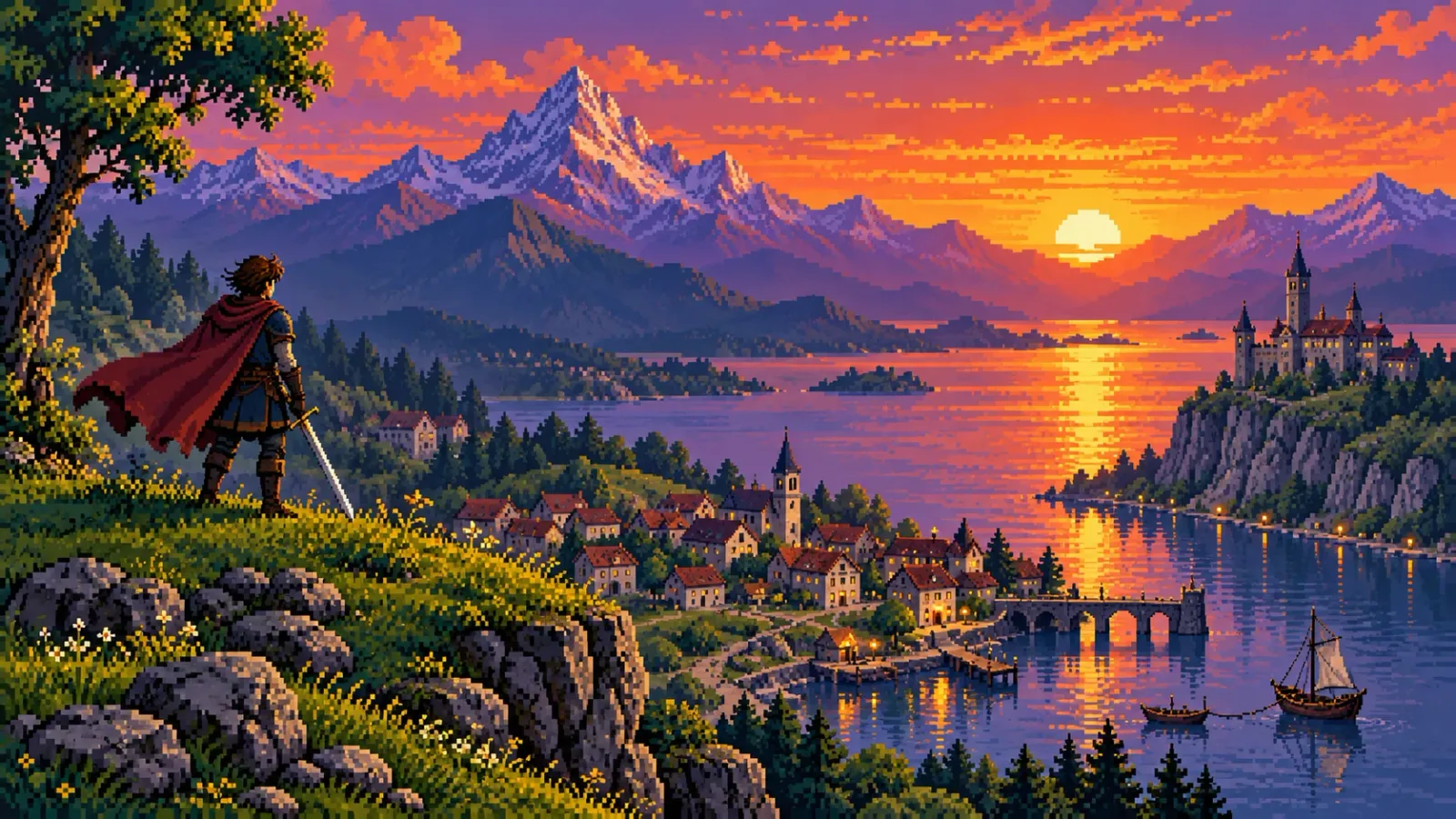
In the eighties nobody drew big pixels for the mood. The hardware showed a few dozen colours at once, and a character had to fit in a square sixteen dots wide. Today any phone plays 4K video, and yet every year dozens of games come out that look like they're from that era. Why?
A limitation that became a style
Pixel art is more than low resolution. It is the art of deciding which single dot says the most: a glint in the eye, the shadow under a hat, the shine on a sword. Every pixel is placed by hand, so nothing is accidental.
Less is clearer
Simple graphics also have practical advantages that are rarely mentioned:
Readability. On a screen full of enemies you can tell at once what is dangerous and what is background.
Imagination. A few pixels are a sketch the player fills in — usually better than the most expensive render.
Cost. A small team can draw a whole world instead of modelling it for years.
fewer tools and licences
faster fixes and testing
lighter games that run on older hardware
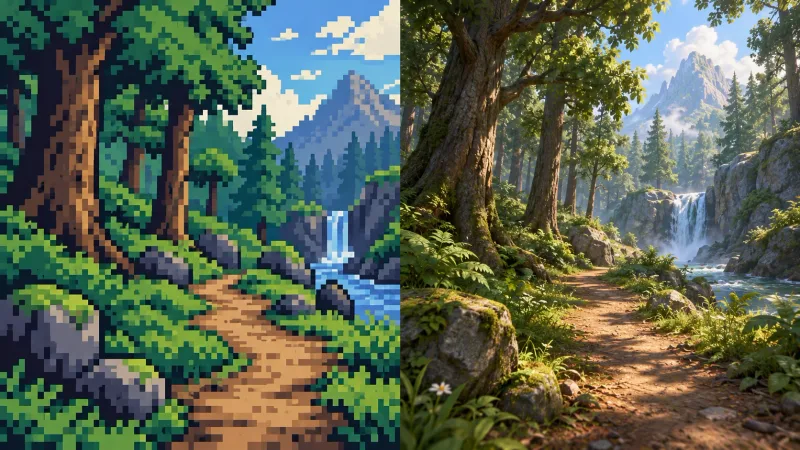
A limited palette forces you to decide. When you only have sixteen colours, you can't hide behind effects.
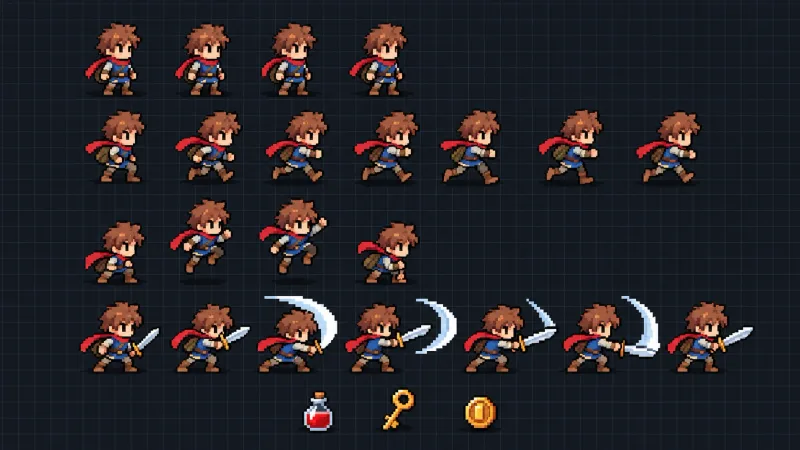
Anyone who has drawn even one walk cycle knows how much work four frames take.
— Tomasz Grot, an artist working on indie games
Nostalgia isn't everything
It's easy to say this is just thirty-somethings missing their childhood. But many players who love these games were born long after the first consoles came out. To them it is simply one of the styles, like comics or watercolour. Take a look at the game rankings — there are more pixel-art titles there than you'd think. And if you'd like to read about the history of the technique, the Wikipedia article is a good start.
How to get started with pixel art
Pick a small canvas, e.g. 32 × 32 pixels, and start with one object, not a character.
Limit your palette to 8–16 colours and stick to it.
Draw the outline, then the shadows, and the details last.
Show your work to others and don't polish forever.
In short:
pixel art is a deliberate choice, not a way to save money;
done well, it ages more slowly than realistic graphics;
and playing it is as much fun as it was in 1990.
This is an example text by the gameweb.pl team. The person quoted is made up.